
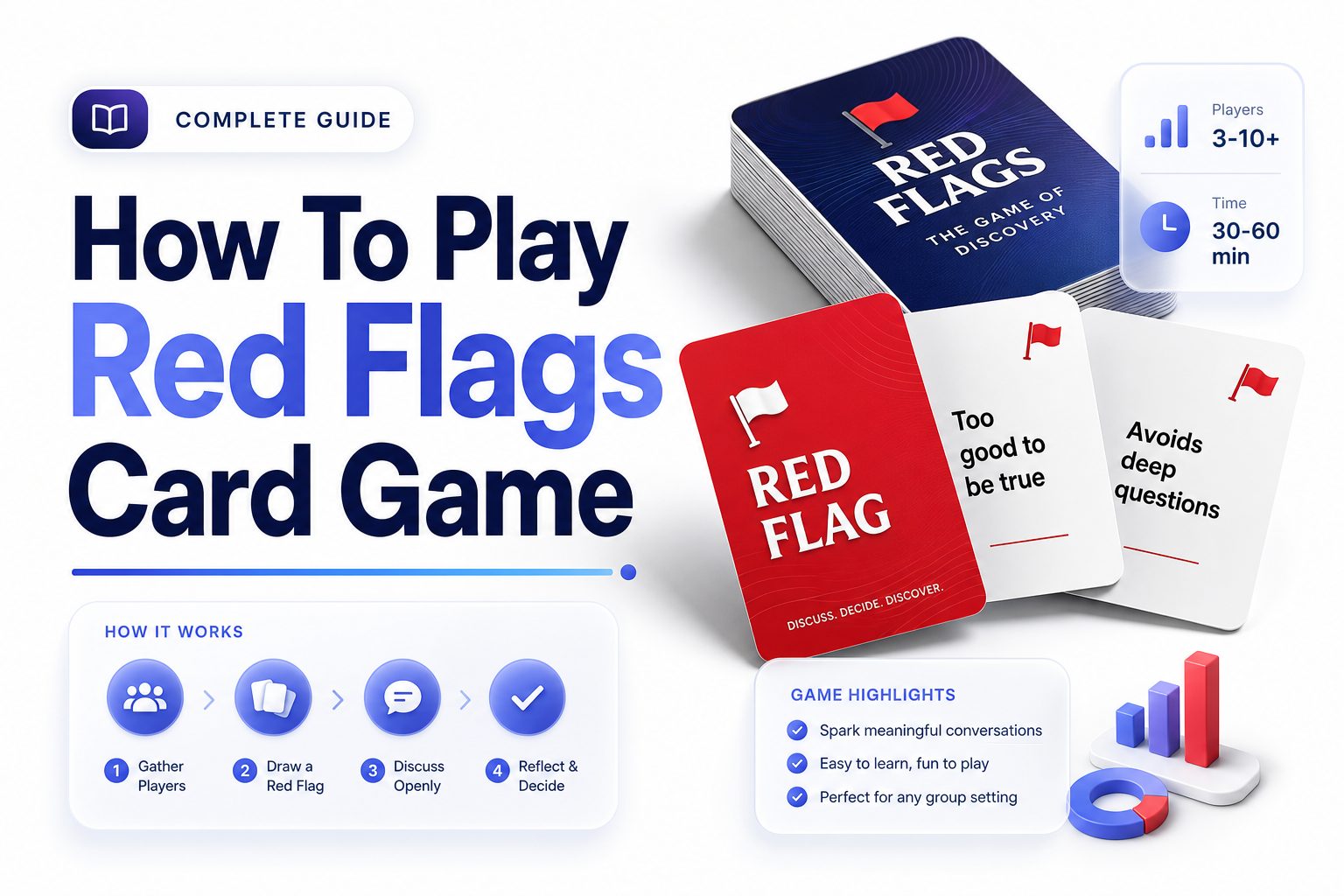
Red Flags is a party card game built around terrible dating choices, funny arguments, and creative persuasion. If you enjoy social games where players defend ridiculous ideas, this game fits casual nights, group hangouts, and adult game sessions.
The goal is simple: create the best possible date for one player, then let another player ruin that date with a major flaw. The fun comes from selling the good traits while trying to explain away the bad one.
This guide covers how to play red flags card game in a clear, practical way. You will learn setup, turn flow, scoring, card types, table etiquette, and simple ways to make each round smoother.
Game Overview
Red Flags is usually played with three or more players, though it feels strongest with four to eight. Each round focuses on one player, called the Single, who chooses the date they would most likely accept.
Other players build imaginary dates using perk cards. These perks may describe attractive qualities, skills, money, hobbies, personality traits, or strange benefits that make a fictional partner seem appealing.
After the good traits are placed, opponents add red flag cards. These flaws make each date awkward, creepy, annoying, or absurd, forcing players to argue why their date is still the best choice.
Main Goal of the Game
The main goal is to win date cards by convincing the Single to pick your created character. Your date does not need to be realistic; it only needs to sound better than the others at the table.
Players use humor, timing, and persuasion to make their date stand out. A weak perk can become funny with the right pitch, while a strong date can fall apart after a brutal red flag.
The game rewards social energy more than strategy. Reading the Single, knowing their humor, and framing your cards well can matter more than drawing the strongest card combination.
What Comes in the Box
A standard Red Flags game includes perk cards and red flag cards. Perk cards are positive traits, while red flag cards are negative traits that create the central joke of each round.
Some editions or expansions may include special themes, extra adult content, or pop culture references. Before playing, check the card mix and remove anything that does not fit your group’s comfort level.
You do not need boards, dice, tokens, or complicated pieces. A table, a shuffled deck, and players willing to argue about fake dating disasters are enough to start.
Players and Age Range
Red Flags works best with players who enjoy conversation and comedy. It is not a quiet card game, and most rounds become funnier when people lean into dramatic pitches and playful debate.
The game is often aimed at older teens and adults because some cards may include mature humor. Families should review the deck first, especially when playing with younger players or mixed-age groups.
For a smoother session, choose players who are comfortable with jokes about dating, habits, personalities, and social situations. The tone should stay playful rather than personal or mean.
Basic Setup
Separate the perk cards from the red flag cards, then shuffle each deck well. Place both decks face down where everyone can reach them without slowing down the round.
Each player draws four perk cards and three red flag cards. Some groups adjust the hand size, but this setup gives enough choice without making turns take too long.
Pick the first Single randomly or choose someone who has not played before. The Single does not build a date during that round; they listen, react, and choose the winner.
Quick Play Notes
- Each player builds one date using two perk cards.
- Another player adds one red flag to that date.
- The Single listens to all pitches before choosing.
- The winning player keeps the round as a point.
- Rotate the Single role clockwise after each round.
Card Types
Perk cards create the attractive side of each imaginary date. These cards may show wealth, kindness, talent, beauty, shared interests, or oddly specific advantages that players can turn into a pitch.
Red flag cards damage a date by adding a flaw. The flaw may be gross, inconvenient, scary, clingy, rude, bizarre, or socially impossible to ignore during the Single’s final decision.
The tension between perks and red flags makes the game work. A date can be perfect on paper, then become impossible to defend after one well-placed negative trait.
Turn Order
At the start of a round, everyone except the Single chooses two perk cards from their hand. These two cards form the attractive profile of their fictional date.
Players place their perk cards face up and may give a short introduction. The pitch can be sincere, funny, dramatic, or completely ridiculous depending on the group’s style.
After perk cards are revealed, each opponent chooses a red flag card to place on someone else’s date. This step turns solid options into chaotic disasters and starts the funniest part of the round.
Building the Best Date
A strong date usually has two perks that work together. For example, a rich person who loves cooking may sound better than two random traits with no clear connection.
Think about the Single’s preferences before choosing cards. If they love travel, pets, music, or calm people, select perks that match their personality and give your pitch a better chance.
You can also build for comedy instead of romance. Sometimes the funniest date wins because the table remembers it, and the Single enjoys the argument more than the actual card strength.
Adding Red Flags
When placing a red flag, target the date that looks strongest. Your goal is to make that option harder to choose while giving your own date a better chance.
Good red flag placement creates a problem that is hard to explain away. A mild flaw may not matter, but a flaw that ruins both perk cards can shift the round fast.
Avoid making the game personal. The cards should attack fictional dates, not real players. Keep the jokes pointed at the imaginary character so the table stays comfortable.
Pitching Your Date
After every date has perks and a red flag, players take turns defending their creation. The pitch is where the game becomes more than matching cards.
A good pitch reframes the red flag as a minor issue, hidden benefit, or funny quirk. You do not need a perfect argument; you need one that makes the Single laugh or hesitate.
Keep pitches short enough to maintain pace. Thirty seconds to one minute usually works well, especially with larger groups where every player needs time to speak.
Winning a Round
The Single chooses one date after hearing all arguments. The player who created that chosen date wins the round and keeps a point, token, or selected card as proof.
There is no official need for deep scoring tools. Most groups simply count wins until someone reaches a target number, such as three, five, or seven successful dates.
The Single role then moves to the next player. Everyone draws back up to the starting hand size, and a new round begins with fresh combinations and new jokes.
Scoring Options
The simplest scoring method is first to seven points. This works well for a full session and gives each player enough turns as the Single.
For shorter games, play until everyone has been the Single twice. This keeps the experience balanced, especially with larger groups where rounds can run longer than expected.
You can also play casually without a final winner. In that format, the main goal is laughter, not scorekeeping, which often suits relaxed parties and late-night sessions.
Useful House Rules
House rules can help Red Flags fit different groups. Some players prefer cleaner humor, quicker rounds, or more strategic card selection, so small adjustments can improve the experience.
One useful rule is a pitch timer. Give each player one minute to defend their date, then give the Single a short final moment before making a decision.
Another option is card vetoing. Let players discard one uncomfortable card per game if it does not fit the room, then draw a replacement without debate or pressure.
Common House Rule Ideas
- Let the Single ask one follow-up question per date.
- Allow each player one card swap before the first round.
- Remove cards that feel too harsh for the group.
- Use a timer when players debate too long.
- Play to three points for a quick session.
Internal Resources for More Game Nights
For a deeper rules reference, you can read this related guide: /red-flags-card-game-rules/. It works well as a quick companion when new players need a shorter rule check.
If your group enjoys dating-themed party games, this internal list may also help: /best-party-card-games-for-adults/. It can give you more options for similar social game nights.
Keep internal links natural inside the article instead of forcing them into every section. One or two useful links are enough when they support the reader’s next step.
Strategy for Perk Cards
Perk cards are stronger when they tell a clear story. Two unrelated good traits can still work, but a connected pair gives you more material during your pitch.
Think about contrast as well. A serious perk paired with a silly perk can make the date memorable, especially when the red flag creates a strange but funny contradiction.
Save flexible perks when possible. Cards that can appeal to many Singles are useful in later rounds, while highly specific perks are best used when they match the current Single.
Strategy for Red Flag Cards
A red flag should create doubt. If the Single can easily ignore it, the card may not weaken the date enough to matter during the final choice.
Look for red flags that cancel the date’s main appeal. If someone builds a sweet, thoughtful partner, a selfish or annoying flaw can damage the pitch quickly.
Timing also matters. If several strong dates are on the table, place your harshest red flag on the one most likely to win, not the one that already looks weak.
Group Etiquette
Red Flags is funnier when players keep the mood light. Since the game uses dating flaws and personal habits, it is important to avoid turning jokes toward real people.
Before starting, agree on the group’s comfort level. Some tables enjoy darker humor, while others prefer silly, awkward, or absurd jokes without anything too sharp.
If a card makes someone uncomfortable, move on quickly. A smooth replacement keeps the game friendly and prevents one awkward moment from taking over the session.
Best Player Count
Four to six players is often the strongest range. There are enough dates to compare, enough red flags to create chaos, and enough table talk without making rounds drag.
Three players can still work, but the choices feel limited. In that setup, consider drawing extra cards or letting each player make two dates for more variety.
With eight or more players, use a timer and keep pitches short. Large groups can be hilarious, but the game needs pace so every round stays active.
Making the Game Funnier
The funniest moments usually come from confident delivery. A weak date can become memorable when the player commits fully and treats the ridiculous combination as completely reasonable.
Use callbacks from earlier rounds carefully. Referencing a previous joke can make the table laugh again, but avoid overusing one joke until it loses its charm.
Let the Single’s reactions guide the energy. If they laugh at absurd logic, lean into it. If they prefer clever arguments, make the pitch sharper and more focused.
Playing With Expansions
Expansions add more perks, harsher red flags, and new themes. They can refresh the game once the base deck starts to feel familiar after several sessions.
Before mixing everything together, check the tone of each expansion. Some sets may be more adult, strange, or specific, so they may not fit every group.
You can rotate expansion cards instead of using all of them at once. This keeps the deck from feeling bloated and helps certain themes appear more often.
Mistakes New Players Make
New players often use their best perk cards too early without thinking about the Single. A great card matters less if it does not fit the person choosing the date.
Another common mistake is overexplaining. Long speeches can slow the round and make the joke weaker, so it is better to make one clear argument and stop.
Some players also forget that red flags are defensive tools. Placing a weak flaw on a strong opponent can leave them too easy to defend during the final decision.
Tips for Hosting
Set the tone before the first round. Explain that the game is about fictional dates, playful persuasion, and quick choices, not serious judgment or personal comments.
Keep drinks, snacks, and table space organized so cards do not get damaged. Red Flags works well in casual settings, but a clear play area helps the game flow.
Teach the game by playing one open practice round. New players usually learn faster from seeing one date built, ruined, pitched, and judged than from hearing every rule first.
Conclusion
Red Flags is easy to teach, quick to start, and built for people who enjoy funny arguments. The rules are simple, but each round feels different because the card combinations keep changing.
The best sessions come from short pitches, smart red flag placement, and a group that keeps the jokes playful. Scoring can be competitive or casual depending on the mood.
Once you know how to play red flags card game, the real skill is reading the Single and selling a ridiculous date with confidence. That mix makes the game memorable.
FAQ
Is Red Flags easy for beginners?
Yes, Red Flags is very beginner-friendly because each round follows a simple pattern. Players build a date, add flaws, make short pitches, and let the Single choose the best option.
How many players are best?
Four to six players usually gives the best balance of pace and variety. Smaller groups can work, but larger groups may need a timer to keep each round moving.
How long does one game take?
A typical game takes about thirty to sixty minutes, depending on player count and scoring. Short games can end at three points, while longer sessions can continue until seven points.
Can Red Flags be family-friendly?
It depends on the deck and group. Some cards may include adult humor, so hosts should review the cards first and remove anything that feels wrong for younger or sensitive players.
Do you need expansions?
No, the base game is enough for many sessions. Expansions are useful when your group already knows the original cards and wants fresh combinations, themes, and stronger variety.
0 Comments